

Yoga Flex Home App
Hadiz Studio
I approached Yoga Flex Home as a simple way to bring a little movement into an ordinary day, rather than as a replacement for a teacher, a studio, or medical guidance. It is a free personalization app from Hadiz Studio, built around the idea of making yoga feel easier to start at home. After spending time with it, my impression is fairly clear: it is most appealing when you want a low-friction routine and a more intentional break from sitting, but it is less convincing if you expect a complete training system with deep coaching, detailed progress analysis, or highly specialized instruction.
The app is listed for Teen users and works on devices running Android 8.0 or later. That makes it accessible to people using older Android phones, which matters for a home exercise tool that does not need to be tied to a brand-new device. It is also free, so the decision to try it is easy. I would still treat the free price as an invitation to test the experience rather than a promise that it will cover every need a dedicated yoga platform might cover.
How Yoga Flex Home feels in everyday use
The strongest part of the experience is the way it encourages a small commitment. I found it easier to imagine opening this app for a short session before work, after a long commute, or during an afternoon when my back and shoulders had started to feel stiff. That is a more realistic use case for many people than promising themselves an ambitious routine and abandoning it after a few days.
Its focus on home practice also gives it a practical identity. You do not need to plan around a class schedule or travel to a studio. A quiet corner, enough room to move safely, and a phone are the basic conditions. I recommend placing the device where the screen can be seen without forcing you to turn your neck constantly. That small setup choice makes following along more comfortable and reduces the temptation to pause repeatedly.
Yoga Flex Home belongs in the personalization space because it changes the feel of a phone from a source of distraction into a prompt for a personal routine. That does not mean it transforms the entire device or offers a broad collection of customization tools. Its personal value comes from fitting movement into your own surroundings and schedule. For someone who wants a manageable home habit, that distinction is important.
Latest News

Uber Eats Under Pressure: What Happens When Delivery Goes Wrong

How QR & Barcode Scanner Adapts to Android and iOS Innovations

Why Waze Navigation & Live Traffic Is Your Essential Travel Companion

CapCut Mastery: Unleash Hidden Features for Pro-Level Editing

How OS Updates Enhance Roblox Adventures

Teacher Simulator: Exam Time Turns Quick Classroom Judgments into a Repetitive Loop
I would not describe it as a substitute for learning alignment from an experienced instructor. A screen can demonstrate a movement, but it cannot reliably notice whether your knee is collapsing inward, whether you are holding your breath, or whether a pose is aggravating an old injury. Beginners should move slowly, avoid forcing flexibility, and stop when something feels sharp or unusual. People managing an injury or medical condition should choose professional advice before using any exercise app.
A useful routine for busy days
One of my favorite ways to use this kind of app is to attach it to an existing habit instead of waiting for motivation. For example, I would finish making coffee, put the phone on a stable surface, and use the next few minutes for movement before opening messages. Another workable routine is a short session immediately after shutting down a laptop. The point is not to chase an impressive workout; it is to make the start so simple that skipping feels less automatic.
There is also a useful distinction between using the app for energy and using it for recovery. A morning session can help you feel more awake, while an evening routine may be better approached gently, especially if you have been inactive. I would avoid judging the app by how intense it feels. For home yoga, consistency, comfortable movement, and a routine you can repeat often may be more valuable than a session that leaves you exhausted.
Gallery
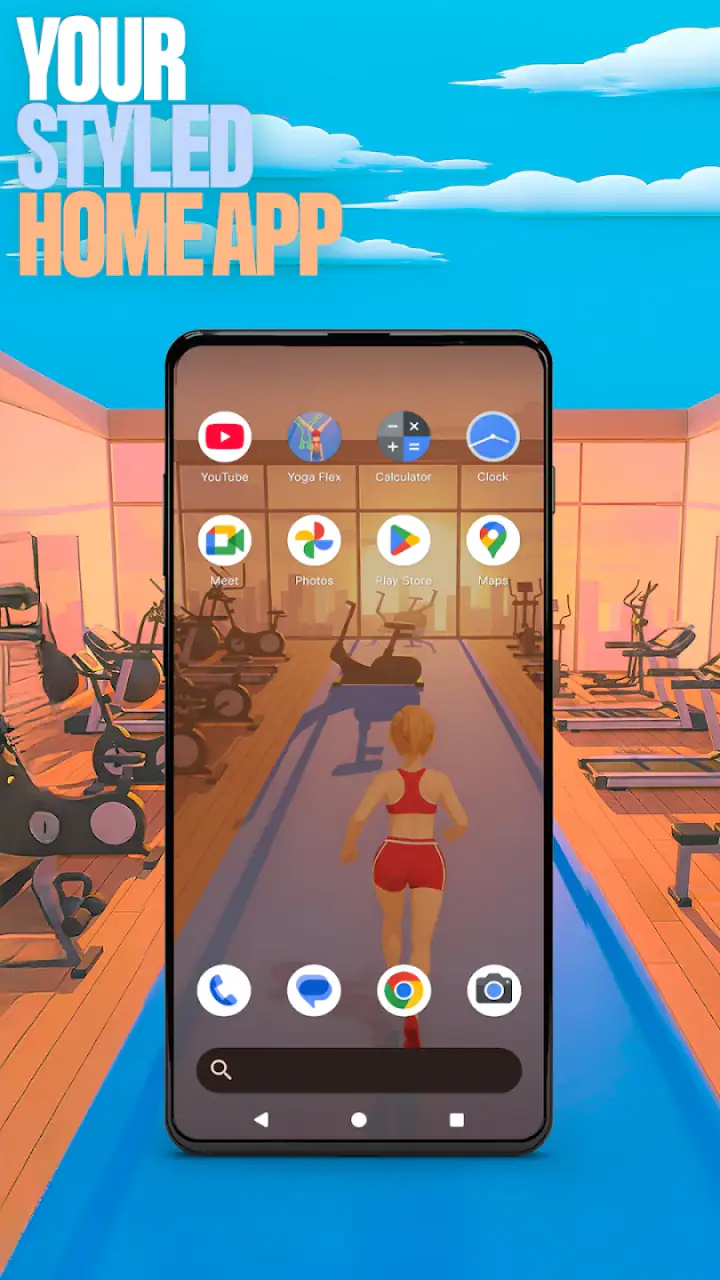
A practical tip is to decide in advance what “done” means. If you only open the app when you have a completely free hour, it may become another task you postpone. Instead, choose a modest target, keep water nearby, and stop while the experience still feels manageable. This approach is particularly useful for people returning to exercise after a long break.
Who is likely to enjoy it
I think Yoga Flex Home suits newcomers who want a gentle entry point, casual users who need a reminder to move, and people who prefer exercising privately. It can also work well for someone who travels between rooms or homes and does not want to depend on studio equipment. The home setting removes some of the social pressure that makes beginners hesitate.
It is less suitable for experienced practitioners who want precise technical feedback, advanced sequencing, or a carefully structured progression. It may also disappoint users who are looking for strength training, high-intensity conditioning, or a broad wellness dashboard. Yoga can support several goals, but an app centered on home flexibility and routine building should not be judged as though it were a full fitness laboratory.
Families should also pay attention to the Teen content rating. That rating is part of how the app is presented, but it is not a substitute for a parent deciding whether the content and exercise style are appropriate for a younger user. Anyone sharing a device should also keep the phone positioned safely, away from water and from places where it could be knocked down during movement.
What the current release tells me
The current version is 1.5, and the app was released on September 18, 2025. Those details give the product a relatively early-stage feel rather than the impression of a long-established platform with years of accumulated refinement. I see that as both an opportunity and a reason to keep expectations measured. A newer app can feel focused and uncluttered, but it may still be developing the depth that older competitors have had time to build.
The public response is encouraging: Yoga Flex Home holds a 4.7 average from around nineteen thousand ratings and has passed one million installs. Those figures suggest that the basic idea resonates with a substantial audience. They do not prove that every user will find the routines suitable, nor do they answer questions about instructional depth. I read them as evidence that the app is easy enough for many people to try and continue using, not as a guarantee of expert-level coaching.
Hadiz Studio appears to be positioning the product around an approachable home experience rather than an intimidating technical system. That choice is sensible. A crowded interface, excessive tracking, or complicated setup could work against the very people who need a simple starting point. In my experience, the best personalization tools are often the ones that help me make a decision quickly instead of presenting so many options that I stop before beginning.
The release and version information also matter for existing users. If you already installed an earlier build, the move to version 1.5 is a reason to check that the app is updated before judging its current behavior. More importantly, I would reassess the app based on how smoothly it fits your present routine, not on an old first impression. Early exercise apps can change their balance between simplicity and variety as they mature.
What changed for the way I would use it
I would approach the current release with a “repeat first, explore second” mindset. Rather than jumping between every available option, I would choose a comfortable starting pattern and repeat it for several days. This makes it easier to tell whether the app is genuinely helping me build a habit or merely giving me a pleasant first session.
That method also reveals a trade-off that store descriptions usually skip. Variety can be motivating, but too much choice can weaken consistency. If Yoga Flex Home presents several possible ways to practice, I would save a personal order outside the app or make a simple note of what felt comfortable. This is not glamorous, but it turns a collection of sessions into a routine I can remember and repeat.
Another useful workflow is to separate “practice selection” from “practice time.” Decide what you will do before you are tired or distracted, then open the app when the time arrives. For a person working from home, that might mean choosing a session during lunch and completing it before returning to the desk. For a student, it could mean using the app as a transition between study blocks. The app becomes more effective when it is connected to a predictable cue.
I would also keep the phone screen at a sensible height. Placing it flat on the floor may make some movements easier to see but can encourage awkward head positioning. A stable stand at a safe distance is preferable. This is a small but non-obvious part of using any visual exercise guide: the better the viewing angle, the less likely you are to interrupt movement just to check the display.
Where the app still feels limited
The central limitation is the gap between demonstration and personal correction. I can follow visual guidance, but the app cannot replace a human who notices subtle form problems. That matters most in poses where alignment, balance, or flexibility varies widely from person to person. If you are unsure whether your form is safe, a qualified instructor remains the better choice.
I also would not rely on it alone if your goal is measurable athletic progress. A serious training plan usually needs a clear progression, recovery planning, and a way to adjust difficulty according to performance. Yoga Flex Home may help you move more regularly, but that is not the same as providing a complete program for mobility, strength, rehabilitation, or sport preparation.
There is a second kind of friction: home practice depends heavily on your environment. A cramped room, slippery flooring, poor lighting, or constant interruptions can make even a well-designed session frustrating. Before blaming the app, I would prepare the space. Clear the area, test the surface with a few slow movements, and keep the phone out of the path of your hands and feet.
The free model is a genuine advantage for trying the app, but it also changes how I evaluate it. I am willing to accept a narrower feature set when there is no purchase barrier, yet I still want the core experience to feel dependable and clear. If you need extensive customization, detailed records, or advanced instruction, a paid specialist service may offer better value even if it costs more.
How it compares with familiar alternatives
Compared with attending a studio, Yoga Flex Home is cheaper, more private, and easier to fit around an unpredictable day. It cannot provide live correction, the motivation of a group, or the reassurance of an instructor physically present. Studio classes are often the better alternative for someone who struggles with self-direction or wants to learn foundational technique carefully.
Compared with video platforms, a dedicated app can feel more focused. A general video service gives you enormous choice, but that choice comes with inconsistent teaching styles, uneven explanations, and the distraction of unrelated content. Yoga Flex Home is more appealing when you want to open one place and begin without searching through endless results. A video platform may still win if you want a particular teacher, language, pace, or specialized style.
Compared with advanced fitness subscriptions, this app appears better suited to simplicity than to comprehensive tracking. A larger platform may combine yoga with running, strength work, nutrition, reminders, and detailed history. That breadth can be useful for people managing several goals, but it can also make the experience feel heavy. I would choose Yoga Flex Home when the priority is a straightforward home practice rather than an all-in-one fitness account.
There is also a difference between a yoga app and a stretching timer. A timer can help you pause during the workday, but it usually does not offer the same sense of guided movement. On the other hand, a timer may be preferable for users who already know exactly what they want to do and do not need demonstrations. The right choice depends on whether you need instruction or merely a prompt.
What I would watch as the product develops
Because version 1.5 belongs to a relatively young product, I would watch how Hadiz Studio balances new material with clarity. More content is not automatically better. The most useful evolution would be improvements that help people choose an appropriate routine, understand movements safely, and return to practice without unnecessary setup.
I would also pay attention to whether the app becomes more helpful for different experience levels without losing its approachable character. A beginner needs reassurance and simple explanations, while a regular user may want a meaningful reason to continue after the novelty fades. Serving both groups requires careful organization; adding options without guidance could make the app harder to use.
Another area worth watching is how the app supports continuity. A home routine becomes valuable when it survives busy weeks, travel, low energy, and changing schedules. Features that make it easier to resume after a break would matter more to me than decorative additions. The best future direction would keep the focus on returning to movement rather than making users feel guilty for missing it.
Existing users should judge updates by practical questions: Can I start more quickly? Is the guidance easier to follow? Does the current version fit my space and ability? New users can ask whether the app helps them practice safely and consistently, not merely whether it looks appealing in the first session. Those questions lead to a more honest assessment than relying on a rating alone.
My recommendation for a first week
If you decide to try it, I suggest beginning with a short, repeatable plan rather than attempting to explore everything immediately. Use the first session to check the viewing angle, the amount of space you need, and how your body responds. Keep movements controlled, breathe normally, and treat discomfort as information rather than a challenge to push through.
For the next few uses, practice at the same general time of day. Note which movements feel natural and which ones require extra care. If a routine leaves you unusually sore, reduce the intensity or take a rest day instead of assuming that more effort means better progress. This approach helps you evaluate whether the app supports your actual life, which is more important than whether it seems impressive in a single sitting.
My final view is positive but deliberately measured. Yoga Flex Home is a useful starting point for people who want accessible yoga at home without paying to experiment. Its strongest qualities are convenience, privacy, and a focus that can make regular movement feel less intimidating. Its weaknesses are the familiar limits of screen-based instruction and the possibility that experienced users will outgrow a simple routine.
I would recommend it to a friend who wants a gentle way to build a movement habit, especially someone who prefers practicing alone or has an unpredictable schedule. I would steer a friend toward an instructor, a more specialized program, or a broader fitness service if they needed detailed correction, rehabilitation support, advanced progression, or a complete training plan. For the right user, the free app is worth trying; just use it as a practical companion for movement, not as a replacement for judgment, technique, or professional care.
FAQs for Yoga Flex Home App
What is Yoga Flex Home App and who is it for?
Yoga Flex Home App is a comprehensive mobile application designed to guide users through various yoga routines from the comfort of their homes. It caters to all levels, from beginners to advanced practitioners, offering tailored programs that suit individual fitness goals. Whether you’re seeking relaxation, flexibility, or strength, this app is ideal.
Does Yoga Flex Home App offer personalized workout plans?
Yes, the app provides personalized yoga plans based on your fitness level, goals, and preferences. Upon setting up your profile, you can select specific objectives, such as improving flexibility or reducing stress, and the app will generate a customized routine to help you achieve these goals effectively.
Is there a cost associated with using Yoga Flex Home App?
Yoga Flex Home App offers both free and premium versions. The free version includes basic yoga routines and features, while the premium subscription unlocks advanced classes, personalized coaching, and additional resources. Pricing for the premium version varies, with options for monthly or annual subscriptions.
Can I use Yoga Flex Home App offline?
Yes, the app allows users to download yoga sessions for offline use. This is particularly useful for those who have limited internet access or prefer to practice yoga in locations without connectivity, ensuring that your yoga practice is uninterrupted regardless of your situation.
What devices are compatible with Yoga Flex Home App?
Yoga Flex Home App is available for both Android and iOS devices. It supports a variety of smartphones and tablets, ensuring a wide range of compatibility. Users can download the app from the Google Play Store for Android devices or the Apple App Store for iOS devices.
Pros
- User-friendly interface for all ages.
- Wide variety of yoga sessions available.
- Customizable session lengths.
- Offline mode for uninterrupted practice.
- Includes guided meditation sessions.
Cons
- Limited free content without subscription.
- No live instructor feedback feature.
- Occasional app crashes reported.
- Requires internet for initial setup.
- Lacks integration with other health apps.


